Posts

Locus of Control

 Locus of control--  a fancy term, yet a concept that is simply foundational to how humans view their own circumstances and life choices. A person's locus of control falls on a spectrum between internal and external. Those with a high internal locus of control feel utterly responsible for everything that happens in life, while those with a high external locus of control feel utterly at the will of the world forces around them. I believe that both viewpoints have a place in a balanced life. I personally was a 10 on a 23 point scale (0 being extremely internal and 23 being extremely external). For the most part, I have a deep sense of responsibility for what happens in my daily life: if I eat healthy, get adequate rest, put in ample study time for that test, I assume I will get desirable outcomes. On the other hand, some things, no matter how hard I try, simply don't turn out as I planned. In those instances, I believe it's best to have a sense of humor about life. To make th...

Media Project Reflection

Image
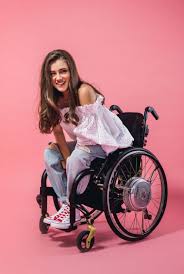
I decided to create “Pick a Stick” because it incorporates energy conservation ideas, facilitates meaningful conversation about who and what is most important to the client, and mimics some of the client’s desired occupations—all while improving fine motor skills. Fine motor skills would be used in many of Jane's typical daily activities such as, documenting at work, inserting needles, bandaging wounds, tying her scrub pants, cooking a meal, pulling weeds, making pottery, and so many more. "Pick a Stick" helps the client plan, prioritize, and pace important tasks throughout the week and encourages social participation to help ward off feelings of depression and isolation. Jane reported having many close friends in her area, making that particular aspect of this intervention possible. The task can be performed in various settings (such as the hospital, an in-patient facility, or the client’s home), and is very inexpensive. It could also be performed either sitting at a ta...

Debilitating, Not Defeating

For my final Neuro Note assignment, I chose to dive deeper into Guillain Barre Syndrome (GBS) by watching the testimony of Andrew Franek. Andrew battled GBS for nearly one year. Before his diagnosis, Andrew enjoyed hunting, going to the gym, playing guitar, boating, and being a firefighter. After becoming sick with a high fever, weakness, and severe rash, Andrew was diagnosed with strep. However, in the weeks that followed, Andrew would become paralyzed below the neck, spend days on a ventilator, and require a tracheostomy and peg tube for basic life support. While the illness (GBS) progressed rapidly, recovery did not—a team approach to therapy and Andrew’s grit helped him to overcome the illness after ten  long  months of fighting. I chose to learn more about Andrew’s experience to help me design an intervention for a young woman with GBS as a part of my upcoming media project. I recommend Andrew’s testimonial video to others who would like a closer look at GBS and the rehab...

Deny, Cope, or Thrive: Living with MS

For my  fourth Neuro Note assignment, I dove deeper into the topic of multiple sclerosis (MS) by watching a TedTalk by Stephanie Buxhoeveden. I chose to watch this talk in hopes of improving my understanding of such a complex disease. Stephanie was diagnosed with MS when she was only 25 years old, a young nurse working her way through a highly selective nurse anesthetist graduate program. Stephanie was planning a wedding and lifted weights in her small amount of free time. Upon receiving her diagnosis, Stephanie was at a crossroads: she could deny her diagnosis, cope with it, or thrive in spite of it. I recommend her TedTalk to anyone hoping to better understand MS and to those suffering from a neurological disorder who are in need of a little inspiration. Stephanie's symptoms of MS first emerged as a tingling sensation in her foot during a routine workout. Like any young, healthy person would, she chalked this feeling up to a pinched nerve or other sports-related injury. However, ...

"Your legs stop, but your life doesn't."

Image
     For my Neuro Note assignment, I chose to watch a short documentary about Sophia Malthus, a twenty-year-old woman who suffered a C4-C5 spinal cord injury after being thrown from her horse. I chose to learn more about Sophia's journey to deepen my understanding of SCI, but also because she seemed relatable to me as a young woman. Before her accident, Sophia aspired to be a jockey and worked tirelessly with horses. Before coming to OT school, I worked for one year in hippo therapy, and met many volunteers who loved horses and many clients who benefitted from therapeutic riding. Below are some of my take-aways from this inspirational video and the resource and link that can be used for others to watch as well.  After her injury, Sophia was categorized as a level A on the ASIA Impairment Scale, the most devastating rating that someone with an SCI can receive. Sophia also experienced complete tetraplegia below her injury-site, causing all neuronal messaging below her ...

Unilateral Neglect: A More Complete View

Image
For my second Neuro Note assignment, I chose to listen to a podcast titled, Unilateral Neglect , by occupational therapists, Jessica Kersey and Natalie Barnes. The podcast gave insight into what unilateral neglect is, how it affects occupations, and how occupational therapists can help clients overcome the difficulties associated with unilateral neglect after stroke. I decided to dive deeper into this topic for a few reasons: (1) I recently participated in my first simulation experience via Telehealth with a patient who suffered from unilateral neglect post-stroke, (2) a family friend (of a friend) in his early 50's was impacted by a massive stroke 2 weeks ago, so I am currently following along with his journey on social media, and (3) stroke and unilateral neglect are topics covered on my upcoming Neuro-Aspects exam. Below is my take-away from the podcast, as well as the reference for others to listen and learn along with me, if interested.  Jess and Natalie defined unilateral n...

Alzheimer's: Why does it occur, and how can we prevent it?

For my first Neuro Note assignment, I chose to watch "What you can do to prevent Alzheimer's," a TED Talk by Lisa Genova. I chose to learn more about this topic because the incidence and prevalence of Alzheimer's seems to be steadily climbing. In high school, I frequently visited by great-grandmother who suffered from a stroke, and later, an Alzheimer's diagnosis. In college, I read a book called,  Sum It Up , by famous basketball coach, Pat Summit. In the book, Summit painted a beautiful picture of her life and her battle with early-onset Alzheimer's. Both my grandmother and Pat  lost some memories and information that their brain had once had readily on hand, but neither lost their emotion-- their ability to feel love, joy, and excitement. Lisa Genova acknowledges this phenomenon by saying, "You are more than what you can remember." I recommend her TED Talk to others who want to learn more about the etiology of Alzheimer's and practical ways to...